
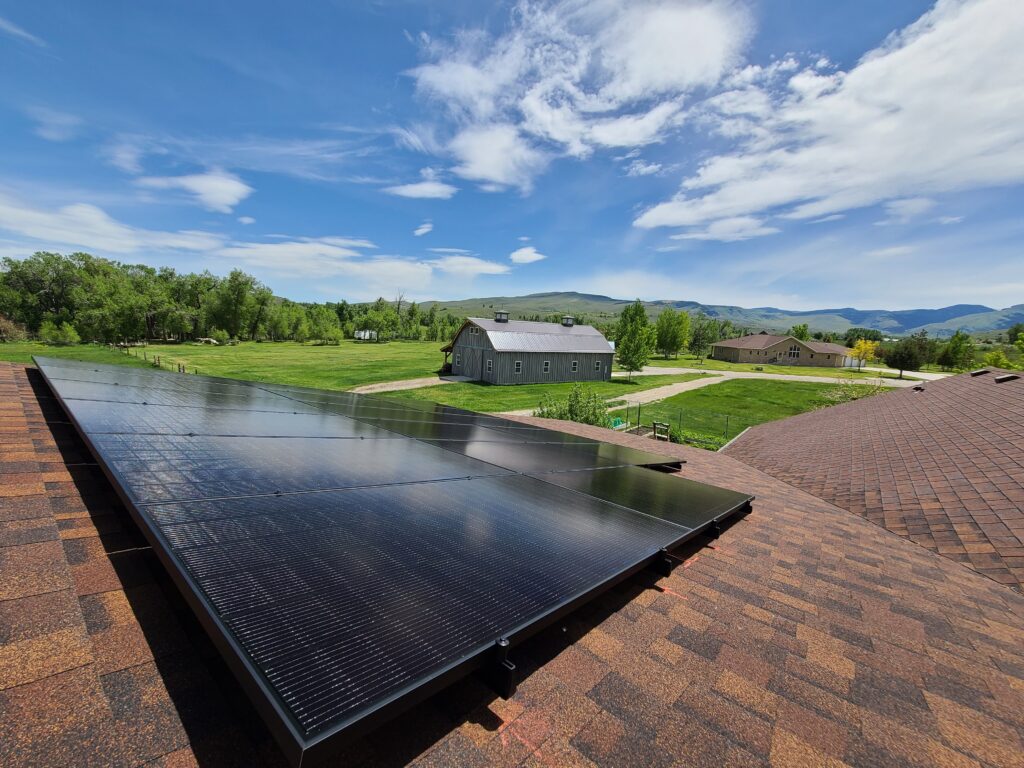
Wyoming doesn’t exactly have a reputation as a sun-soaked paradise, with snowdrifts, wind that’ll knock a hat clean off your head, and winters that stretch on and on. So when homeowners start pricing out solar panels in Wyoming, the first question is usually some version of “Does solar make sense here?”
Yes, and the reasons might surprise you. However, it depends on your roof, utility bill, goals, and policies that have changed quite a bit in the last year. Let’s walk through it.
Does Wyoming Actually Get Enough Sun for Solar?
Surprisingly, Wyoming is considered strong solar territory. According to the University of Wyoming’s climate atlas, Wyoming is the 9th sunniest state, with sunshine across most of the state ranging from about 60% of the possible amount in winter to roughly 75% in summer, averaging around 64% annually. Plus, the thinner air at elevation means less atmosphere scattering that sunlight before it hits your roof.
Wyoming receives roughly 5.5 to 6.5 peak sun hours per day on average, a figure that puts it in the same range as Colorado and New Mexico, some of the sunniest states, according to solar resource data. That’s counterintuitive for a state better known for blizzards than beaches.
What Do Solar Panels Cost in Wyoming Right Now?
Costs vary based on system size, roof complexity, and equipment choice, so there’s no single number that fits every home. What we can say clearly is that the incentive picture changed dramatically at the start of 2026, and a lot of outdated information is still floating around online.
The Federal Tax Credit Situation in 2026
If you’ve read that homeowners can claim 30% back on a solar purchase, that information is behind the times. Under the One Big Beautiful Bill, federal residential solar tax credit under Section 25D expired for homeowners on December 31, 2025, and does not apply to systems placed in service in 2026 or later. Systems purchased with cash or a loan no longer qualify for federal credit.
However, business owners may have more options, as the One Big Beautiful Bill allows certain commercial projects to qualify through the end of 2027 for a 30% tax credit, or 40% for equipment made in the US.
This means the savings rely more heavily on the utility savings side of the ledger, which, as it turns out, still works in Wyoming homeowners’ favors.
Incentives and Programs That Still Make Solar a Good Option
Individual Net Metering
Wyoming allows individual net metering systems up to 25 kilowatts, with no statewide cap on total program enrollment.
In plain terms: when your panels produce more energy than your home uses, that surplus gets credited back on a 1-to-1 basis (kWh to kWh) to offset what you pull from the grid later.
USDA REAP Grants for Farms, Ranches, and Rural Properties
For agricultural operations and rural small businesses, the USDA’s Rural Energy for America Program (REAP) has historically been a serious lever, covering up to 25% of eligible project costs through Farm Bill funding, with certain qualifying projects reaching as high as 50% under prior Inflation Reduction Act funding.
However, as of early 2026, USDA paused new REAP grant awards while it rewrites program rules, though guaranteed loan applications are still being accepted.
How Wyoming’s Low Electricity Rates Impact the Math
Wyoming has some of the cheapest electricity in the country, with residential rates averaging around 14.68 cents per kilowatt-hour compared to the national average near 18.83 cents per April 2026 data.
Lower rates mean each kilowatt-hour your panels generate offsets a smaller dollar amount than it would in, say, California or Massachusetts. Does that make solar a worse investment here? Not necessarily. It just means payback depends more on your actual usage, your roof’s orientation, and whether you’re pairing panels with battery storage to hedge against rising rates or grid outages.
Rates have been climbing steadily nationwide, and Wyoming isn’t immune to that trend long term, even from a low starting point. Solar is a good way to help you maintain more affordable prices in the long run.
What Affects Your Payback Timeline
Payback in Wyoming is affected by:
- Your home’s current electricity usage and rate schedule
- Roof pitch, orientation, and any shading from trees or nearby structures
- Whether you finance or buy
- Local incentives available at the time of installation, since these shift year to year
- Whether battery storage is part of the system, which changes cost and resilience
So, Is Solar Worth It in Wyoming?
For a lot of Wyoming homeowners, yes, solar is worth it, especially for those planning to stay in their home for years to come, folks living in grant-qualifying rural areas, and anyone tired of watching utility rates creep upward with no end in sight.
The federal incentive landscape looks different than it did a year ago, but Wyoming’s sunlight and reasonable net metering rules haven’t gone anywhere.
Creative Energies Solar has been solving solar problems across Wyoming for more than 25 years, backed by our B Corp certification. For every project we complete, we donate to the Honnold Foundation solar grants program to support future solar access.
If you’re weighing the decision to switch to solar, we’d love to talk.