
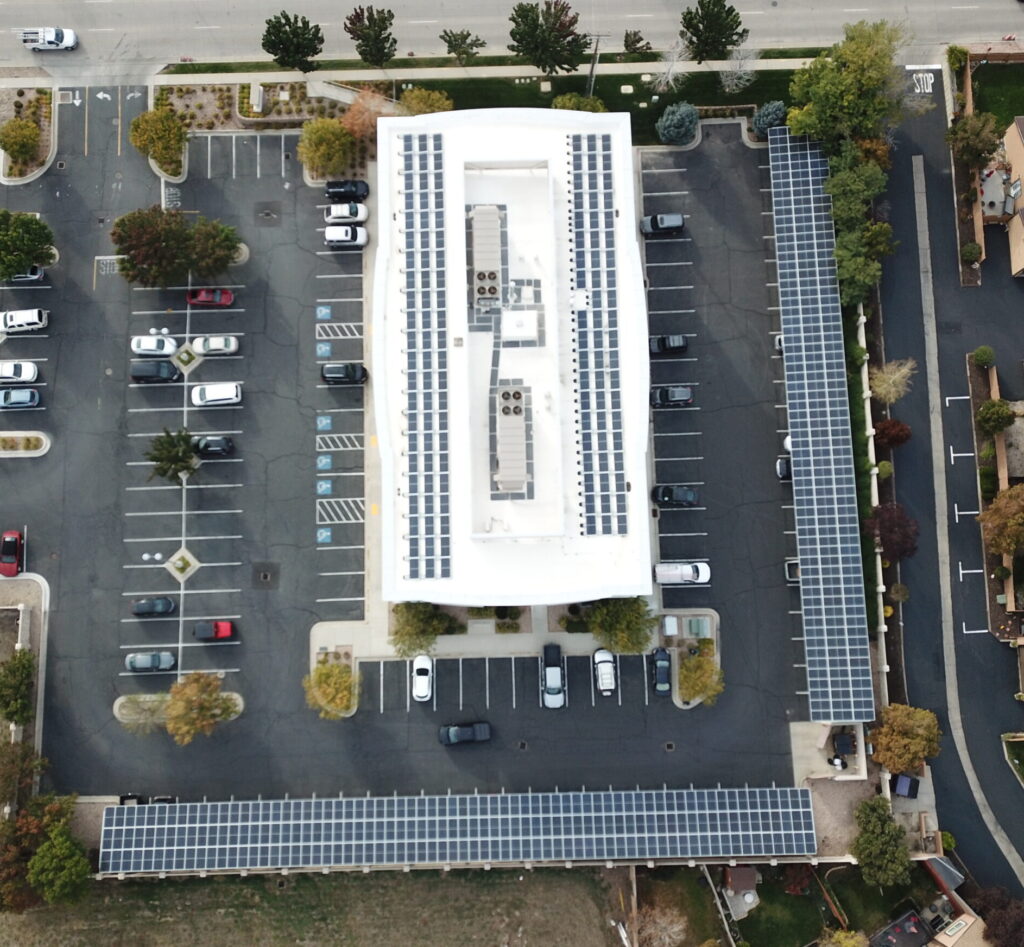
If you run a business, nonprofit, or agricultural operation in Utah, you’ve probably done the math on your power bill more than once. As rates climb and budgets tighten, the question stops being “Should we go solar?” and becomes “what will this cost, and when does it pay for itself?”
Commercial solar in Utah looks different than a residential rooftop array, and the incentive landscape has shifted quite a bit over the past year.
Here’s what business owners, school administrators, and municipal leaders need to know, plus how a properly designed system earns its keep.
What Commercial Solar Actually Costs
Commercial systems vary widely based on size, roof versus ground mount, and whether battery storage is included. A small retail building and a 40-acre agricultural operation are two very different operations, so cost estimates that promise one flat number per watt tend to fail under scrutiny.
But these two operations still share things in common when it comes to commercial solar costs:
- Equipment quality
- Design accuracy
- Installer experience
- Operation and maintenance
All of these things move the needle more than almost anything else. An incorrectly sized system or underperforming components erode the savings you were counting on.
That’s the gap Creative Energies works to close, with NABCEP-certified technicians on every project and certified Tesla Powerwall, Franklin, and Enphase battery storage available for businesses that want backup power baked in.
Incentives Worth Knowing About in 2026
This is where things have gotten complicated, and where businesses may leave money on the table simply because the rules changed underneath them.
The Federal Commercial Tax Credit is Still Here, but The Clock is Running Out
Under Section 48E, commercial solar projects can claim a 30 percent investment tax credit if they are completed by the end of 2027 and meet certain requirements, according to the Solar Energy Industries Association.
Nonprofits, schools, and government agencies can access the credit, too, through Direct Pay, which lets tax-exempt entities receive it as a cash payment rather than a deduction.
USDA REAP Funding is in Flux
The Rural Energy for America Program has historically covered a meaningful share of project costs for agricultural producers and rural small businesses. As of early 2026, the grant portion is paused while USDA finalizes new rules, though the guaranteed loan program remains open. If your operation qualifies, it’s worth having a conversation now so you’re ready to go the moment the new guidance is published.
Utah’s State Credit and Utility Programs Still Add Up
The state’s commercial renewable energy tax credit can cover 10 percent of eligible system cost up to $50,000, refundable if it exceeds what you owe, though this incentive is set to expire for systems placed in service after January 1, 2028.
Additionally, Rocky Mountain Power’s Wattsmart Business program offers incentives for related efficiency upgrades and battery storage that often get bundled into a solar project.
One thing to set expectations on: Utah moved away from traditional net metering back in 2020. New commercial customers now fall under net billing, or Schedule 137, which credits exported energy at a lower rate than what you pay to pull power from the grid. It’s still valuable, just not the dollar-for-dollar swap some folks remember from years prior.
What ROI Looks Like for Commercial Solar in Utah
Payback periods for commercial solar in Utah vary quite a bit depending on your rate schedule, your on-site consumption ratio, and how the incentives stack for your specific project. Businesses on higher commercial rate schedules, or those pairing solar with battery storage to shave peak demand charges, often see the strongest returns.
Grants and manufacturer partnerships aside, the real driver of ROI is front-loaded planning. That means understanding your utility’s export credit rate before you sign anything. And it means working with a crew who has actually navigated Rocky Mountain Power’s interconnection process before, because that step alone can make or break a project timeline.
A Realistic Timeline for Commercial Solar Projects in Utah
Most commercial projects in Utah take anywhere between three and six months from signed contract to system energization, though larger ground-mount arrays or projects requiring grant approval can take longer.
The process looks something like this:
- Site assessment and design
- Permitting and utility interconnection paperwork
- Procurement
- Installation
- Final inspection
Timelines may change during the permitting and interconnection stage, especially on properties where a standard installer hasn’t worked before, whether that’s a rural ag operation, a historic downtown building, or a site with an unusual utility relationship.
Why Businesses Choose Creative Energies
Creative Energies Solar has spent more than 25 years building commercial and nonprofit solar systems across the Northern Rockies, backed by NABCEP-certified technicians, licensed electricians, and a Certified B Corporation status that holds the company to high standards.
As solar craftspeople, we’ve worked with school districts, municipalities, agricultural operations, and businesses on properties where other installers hesitated. Every completed project feeds the company’s Give Back Program, funding future solar grants through the Honnold Foundation.
If you’re considering commercial solar for your Utah business, nonprofit, or municipality, the current incentive window rewards moving now rather than waiting. Let’s talk!