Running a farm, ranch, or rural business means keeping an eye on more moving parts than most people realize: weather, markets, equipment, and yes, the power bill. Energy costs eat into margins that are already thin, especially for operations in Utah and Wyoming. That’s where a REAP solar grant can help.
The Rural Energy for America Program, better known as REAP, has helped agricultural producers and rural small businesses across the country install solar and other renewable systems for close to two decades. If you’ve heard the term tossed around at a co-op meeting or come across it while researching solar for your operation, this guide breaks down what the program offers, who qualifies, and what the application looks like from start to finish.
What Is a REAP Grant?
REAP stands for the Rural Energy for America Program, a USDA Rural Development initiative that funds renewable energy systems and energy efficiency upgrades for agricultural producers and rural small businesses. Solar lands near the top of the list of eligible technologies, alongside wind, biomass, geothermal, and small hydropower.
Grant funding for renewable energy systems ranges from $2,500 up to $1 million, and energy efficiency grants run from $1,500 to $500,000. Depending on the project type, USDA covers up to 50 percent of costs for priority categories like zero-emission systems, projects in designated Energy Communities, and tribal entities, with 25 percent as the baseline share for other qualifying work. Loan guarantees can stack on top of a grant, covering up to 75 percent of total project costs when the two are combined.
That’s federal money aimed at renewable energy on working land, and it can change the math for a farm that’s spent years running the numbers without pulling the trigger.
Who Qualifies for a REAP Grant Solar Project?
Two groups can apply, and the requirements differ slightly between them.
Rural Small Businesses
Private for-profit businesses, cooperatives, electric utilities, and tribal corporations can also apply, provided they meet Small Business Administration size standards and operate in a rural area with a population of 50,000 or fewer. (You can check your property eligibility here.) No outstanding delinquent federal debt or taxes either; USDA checks that before anything else moves forward.
Agricultural Producers
Farmers, ranchers, dairy operations, and other agricultural producers qualify if at least 50 percent of their gross income comes from agricultural operations. Unlike rural small businesses, agricultural producers aren’t boxed into strict population limits. Projects tied to on-site production can qualify even outside the standard rural population threshold.
What REAP Grant Solar Funding Pays For
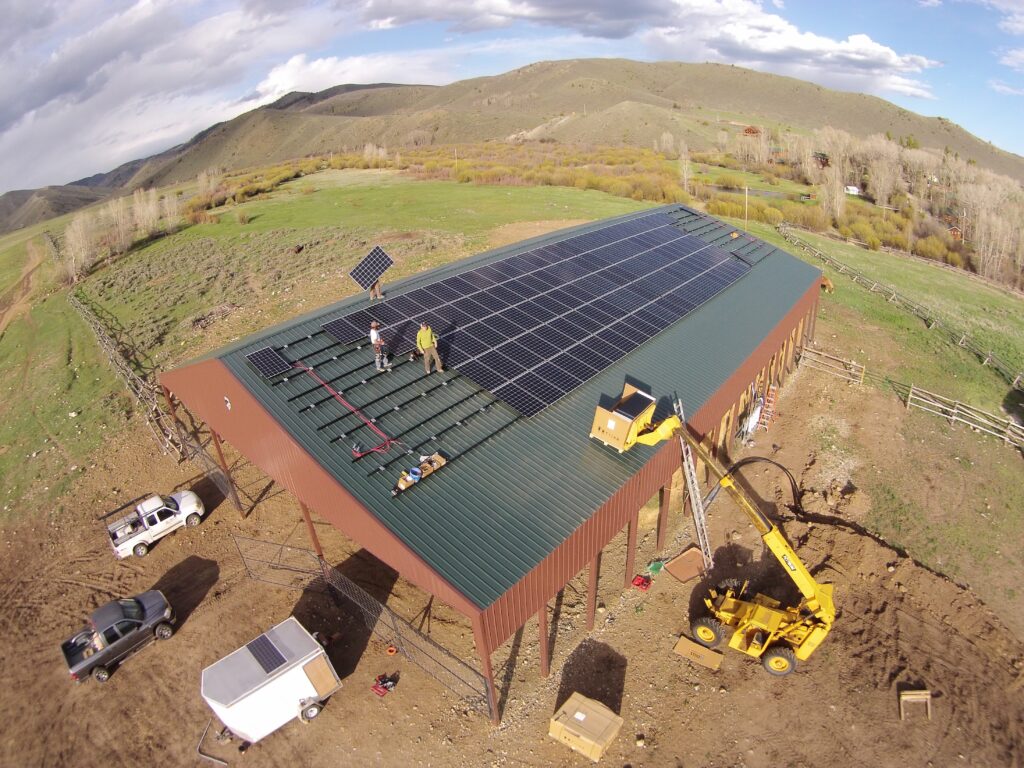
A REAP grant solar project typically covers the equipment and installation costs tied directly to the system: panels, mounting structures, inverters, and the labor to get everything grid-tied and running. Battery storage can factor in, too, when it’s part of the renewable energy system design.
Energy audits work a little differently. USDA requires an audit or assessment for energy efficiency improvement applications, scaled to the size of the project, but that requirement is separate from the equipment and installation budget for a solar system itself. In past cycles, a companion REAP grant funded outside organizations to provide those audits to producers and small businesses at low or no cost. That companion grant has no funding for fiscal year 2026, so plan on budgeting for your own audit or assessment rather than counting on subsidized help this cycle.
The USDA has signaled it wants to steer the 2026 and future REAP cycles away from ground-mounted solar on actively farmed land. If your project is on a rooftop, carport, or land that isn’t in active production, that doesn’t matter as much. If you’re eyeing a ground-mount system on cropland, expect more documentation around historical energy use and land classification.
The REAP Grant Application Process, Step by Step
Applying for a REAP grant solar project involves more paperwork than flipping a switch, but it’s not the maze people expect once you know the order of operations.
- Register with SAM.gov. Every applicant needs an active System for Award Management registration and a Unique Entity ID before submitting anything. Both are free, though the registration itself can take a couple of weeks, so start early.
- Contact your State Rural Development Energy Coordinator. Coordinators can flag issues with a project before it becomes a submitted application, which saves everyone time.
- Check whether your project needs an energy audit. USDA requires an audit or assessment for energy efficiency improvement applications, and your State Energy Coordinator can confirm what a solar-specific project needs on top of that. Budget for this cost yourself rather than counting on subsidized assistance, since the related grant that used to fund low-cost audits isn’t funded for 2026. This is also where working with a solar installer who knows the REAP process pays off, since the paperwork needs to meet USDA’s review standards.
- Select the right application form. USDA sorts applications by project cost: Form 4280-3A for projects at or under $80,000, Form 4280-3B for projects between $80,001 and $199,999, and Form 4280-3C for anything at $200,000 or above.
- Gather vendor certifications and supporting documents. Your solar installer completes a Renewable Energy Systems Vendor Certification form, confirming the equipment and installation meet program requirements.
- Submit to your local Rural Development office and clear environmental review. Every awarded project goes through an environmental review before construction starts.
Where the Program Stands Right Now
REAP grant applications are paused as of this writing. According to an October 2024 Federal Register Notice, loan guarantees are still available year-round through local Rural Development offices, and funding for the program itself remains in place through at least 2027, with money available for use through 2031.
This means you still have an opportunity to apply, but you’ll want to make sure you have your paperwork and energy assessment ready before applications reopen.
Why Farms and Rural Businesses in Utah and Wyoming Work with Creative Energies Solar on REAP Grants
Grant paperwork is its own harvest season: there’s a lot of upfront work on a timeline you don’t fully control. Creative Energies Solar has spent more than 25 years helping farms, ranches, nonprofits, and rural businesses in Utah and Wyoming design solar systems and track down the funding to pay for them, REAP included.
Creative Energies Solar is a Certified B Corporation, which means we hold ourselves to high standards, both socially and environmentally. We go above and beyond in all we do, even for seemingly small things like helping with REAP paperwork for a farm in rural Utah or a ranch outside Lander.
Whether your operation needs a ground-mount array, a solar carport over equipment storage, or a battery-backed system for reliability during outages, we’re here to help.
Ready to see what a REAP grant solar project could mean for your farm, ranch, or rural business? Let’s talk through your options and figure out what funding fits your needs.